
TECH TALK: September 2026
Wildfires have devastated the West and many other parts of the country in recent years. Although wildfires are often a naturally occurring phenomenon, dry climate and above average temperatures have created less than ideal conditions where wildfires can thrive. The average annual acreage burned in the U.S. has almost tripled in the past 30 years. To combat this, Colorado has implemented a Wildfire Resiliency Code.
The specific requirements of this new code can be difficult to understand and easily misinterpreted. To get a better understanding on the new code, I spoke with a Wildfire Mitigation Specialist & Chief Building Official from two counties in the Western Slopes.
The Colorado Wildfire Resiliency Code covers ventilation, exterior glazing, siding, framing material, and much more. We will continue to take a deeper dive into the Colorado Wildfire Resiliency Code in future Tech Talks, but this article will specifically address Single Ply Flat Roofing requirements within the new Code.
Mapping / Zones
The Colorado Division of Fire Prevention & Control has developed a wildfire intensity map which can be seen below. The main classifications are Low Intensity, Medium Intensity, and High Intensity.
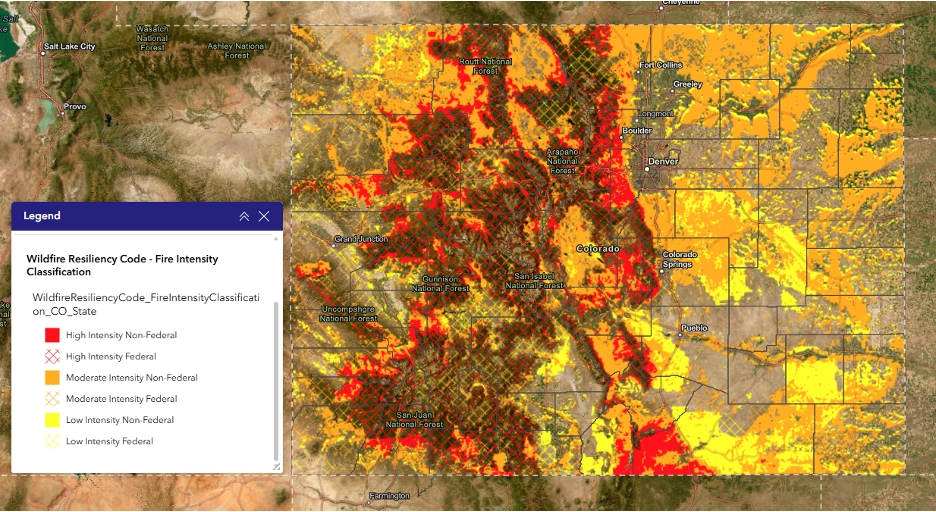
The minimum requirements that all counties must abide by is based on this map. That being said, a County Building Department can revise the zoning within their county as long as it enhances the requirements provided by the Colorado Division of Fire Prevention & Control.
After speaking with a Chief Building Official in Garfield County, there are many factors that they will be taking into consideration as they develop their new zoning map. This includes, but is not limited to, Vegetation Fuel, Topography, Historical Data, Weather Patterns, etc.
The Colorado Wildfire Resiliency Code Map and Code Information can be found in the links below:
How will this new code effect Contractors?
There is a long list of new requirements that must be considered when determining which building components to utilize on a project. As mentioned previously, we will be discussing requirements for Single Ply Flat Roofing Assemblies below.
Any location that falls within a Low, Medium, or High Intensity Wildfire Classification Zone must have a UL-Class A Roofing Assembly installed. This is a minimum requirement, and you should always contact the county’s Building Department to confirm when a UL Class-A Assembly is or isn’t required.
After speaking with Eagle County's Wildfire Mitigation Specialist, they will also be revising their county's wildfire intensity classification map and make UL-Class A Assemblies a County-Wide requirement on all New Construction Projects. This requirement is above and beyond the Colorado Wildfire Resiliency Code. That being said, never assume that the new codes wildfire classification map is consistent in each county, because you might get burned on an inspection (pun intended).
Luckily, Carlisle has a wide array of Code Approval Guides which can be referenced when creating UL-Class A Assemblies. CSL West is also happy to provide assistance when developing UL-Class A Assemblies.
Links to Carlisle’s Code Approval Guides can be found below:
Key Takeaways
UL Class-A Assemblies are required in Low/Medium/High Intensity Fire Classification Zones on New Construction Projects.
Don’t assume the Colorado Wildfire Resiliency Code Requirements are the same in each county. Contact your Local Building Department to confirm if their requirements exceed the Colorado Wildfire Resiliency Code.
Utilize Carlisle’s Code Approval Guides & CSL West to help develop UL Class-A Assemblies.
We will continue to provide more information on the Colorado Wildfire Resiliency Code in upcoming Tech Talk Articles. If you have any questions, concerns, or requests for additional information regarding this article, please contact Dane Helnore at CSL West.